Ficus Elastica Tineke Care in Singapore: How to Keep Variegated Rubber Plant Leaves Bright
Posted on September 16 2026
Ficus Elastica Tineke is one of the prettiest rubber plant varieties for Singapore homes, with cream, green and soft pink tones that look especially good in bright living rooms. The trade-off is simple: the variegation stays cleanest when the plant gets enough indirect light and a steady watering rhythm.
This guide covers how to care for Ficus Tineke indoors in Singapore, including where to place it, how often to water, and what to do when the leaves start browning or losing contrast.

Best light for bright variegation
Ficus Tineke needs more light than a plain dark-green rubber plant because its pale sections contain less chlorophyll. In Singapore apartments, aim for bright indirect light: near an east-facing window, a bright balcony doorway, or a south/west-facing window softened by sheer curtains.
If the new leaves grow smaller, greener, or stretched toward the window, the plant is asking for more light. Avoid harsh direct afternoon sun on the pale leaves, as it can scorch cream variegation quickly.
Featured plant
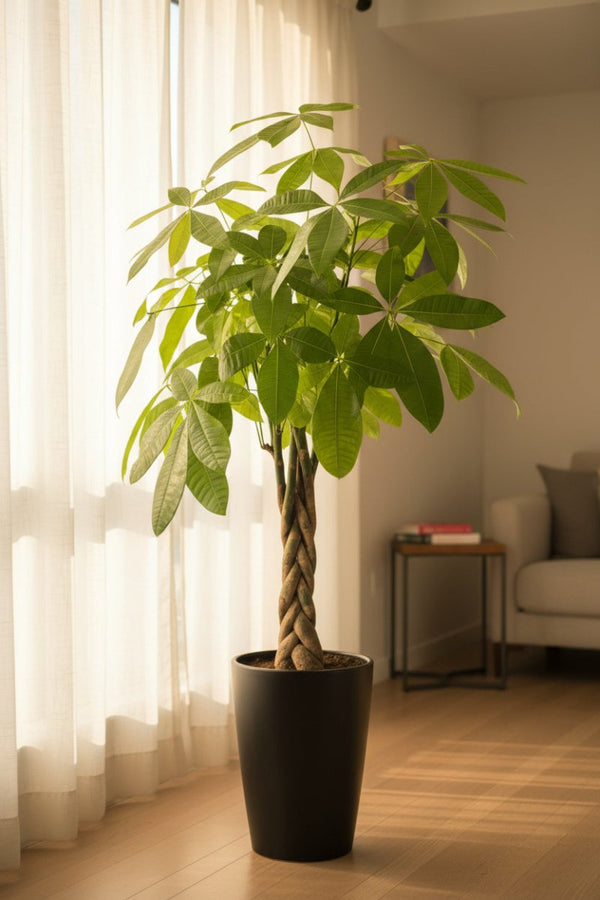
Ficus Elastica ‘Tineke’ is a variegated rubber plant suited to bright indoor corners, shelves and statement floor-plant styling when given enough filtered light.
Watering in Singapore humidity
Because Singapore is humid, Ficus Tineke often dries more slowly indoors than it looks from the top of the pot. Water when the upper layer of soil has dried and the pot feels lighter, rather than watering on a fixed calendar.
- Too much water: lower leaves yellow, soil stays wet for days, or stems feel soft.
- Too little water: leaves droop, edges crisp, and the root ball pulls away from the pot.
- Good rhythm: soil dries partially between watering, leaves stay firm, and new growth emerges steadily.
When in doubt, wait another day and check the soil deeper down. Rubber plants prefer a slightly dry pause over constantly damp roots.
Soil, pot and drainage
A chunky, drainage-friendly mix is ideal. Ficus roots like oxygen, so avoid dense soil that stays wet at the bottom of a decorative pot. If you use a cover pot, always empty any collected water after watering.
Choose a stable pot because mature rubber plants become top-heavy. For styling, pair Ficus Tineke with a simple neutral planter so the leaf variegation remains the focus. Browse indoor plants and plant care essentials if you are building a complete setup.
Leaf care and pruning
Dust shows easily on broad rubber plant leaves. Wipe the leaves gently with a soft damp cloth so they can photosynthesise well and keep their soft sheen. Rotate the pot every couple of weeks to keep growth balanced.
Prune only when needed: remove damaged leaves, shorten leggy stems, or encourage branching above a node. Ficus sap can irritate skin, so wash your hands after pruning and keep cuttings away from pets and children.
Quick care summary
- Give Ficus Tineke bright filtered light to maintain cream-green variegation.
- Water only after the top soil has dried and the pot feels lighter.
- Use a free-draining mix and never let the pot sit in collected water.
- Wipe leaves regularly so the broad foliage can absorb light efficiently.
FAQ
Can Ficus Tineke grow in low light?
It may survive for a while, but the variegation often dulls and growth slows. Bright indirect light is much better for long-term colour.
Why are the cream parts turning brown?
Brown patches can come from harsh direct sun, inconsistent watering, low airflow, or roots staying too wet. Check placement and soil moisture before adding more water.
How often should I water it in Singapore?
There is no fixed weekly rule. Check the soil and pot weight. Air-conditioned rooms, pot size and light level all change how quickly the mix dries.
Is Ficus Tineke pet-friendly?
Rubber plants are not considered pet-safe if chewed. Keep them away from curious pets and children.
Bring home a brighter indoor statement plant
Choose a plant with the right light needs for your Singapore home, then support it with steady care.