Ponytail Palm Care in Singapore: How to Grow a Sculptural Low-Water Plant Indoors
Posted on September 23 2026
 In this guide
Shop palms
1 in the collection · Free delivery above $99
The Ponytail Palm is one of those plants that looks dramatic without asking for dramatic care. Its swollen base stores water, while its long, ribbon-like leaves soften shelves, desks and bright corners. For Singapore homes, that makes it especially useful: it tolerates short dry spells, it does not need constant misting, and it suits apartments where air-conditioning and humid weather can make watering routines confusing.
This guide covers how to grow a Ponytail Palm indoors in Singapore, from light and watering to pot choice, pruning and troubleshooting. If you are browsing for easy-care greenery, you can also explore Tumbleweed's indoor plants collection and essential plant care accessories.
Why Ponytail Palm works well in Singapore homes
Despite the name, Ponytail Palm is not a true palm. It is a drought-tolerant plant with a bulb-like trunk base that stores moisture. That storage habit is the reason it dislikes wet, heavy soil more than brief dryness. In Singapore, where humidity is naturally high, the key is to give it bright light, fast drainage and a restrained watering routine.
- Best for: bright living rooms, sunny study corners, balconies with filtered light, and low-maintenance plant parents.
- Care level: easy, as long as the roots are not kept constantly wet.
- Look: sculptural base with a fountain of fine green leaves.
- Watering style: deep but infrequent watering, then let the mix dry down.
Light: bright is best, but avoid harsh midday scorch
A Ponytail Palm grows best in bright indirect light. Place it near a sunny window, a bright balcony door, or a well-lit corner that receives several hours of ambient light daily. Gentle morning sun is usually welcome. If your home gets strong afternoon sun through glass, move the plant slightly back from the window or use a sheer curtain to reduce leaf scorch.
In dim corners, the plant may survive for a while but growth becomes slower and the leaf crown can look thinner. If your brightest spot is still quite shaded, consider rotating the plant closer to the window a few days each week rather than watering more often. More water will not compensate for low light.
Watering: let the pot dry before watering again
The most common Ponytail Palm problem in Singapore is overwatering. Its base stores water, so the roots prefer oxygen around them between drinks. Before watering, check the top few centimetres of soil. If it still feels cool and damp, wait. When the mix is dry, water thoroughly until excess water drains out, then empty the saucer.
As a simple routine, many indoor Ponytail Palms need watering roughly every 1–2 weeks in a bright, warm room, and less often in air-conditioned or lower-light spaces. Always adjust based on the pot size, light level and how quickly the soil dries. A small plant in a grow pot dries faster than a large plant in a decorative cover pot.
Soil and pot choice: drainage matters more than decoration
Choose a pot with drainage holes, or keep the nursery grow pot inside a decorative planter so you can remove it for watering. A chunky, well-draining mix is better than dense soil that stays wet for days. If you are repotting, look for a light indoor potting mix and avoid upsizing too aggressively; a slightly snug pot helps the soil dry at a safer pace.
If you love the look of ceramic or cement planters, they can work well as cover pots. Just make sure the inner grow pot is not sitting in leftover water after each watering session.
Humidity, air-conditioning and leaf care
Ponytail Palm does not need high humidity or regular misting. In fact, misting is rarely necessary in Singapore and can encourage dust to cling to the leaves. Instead, wipe or rinse the leaves occasionally to keep them clean. If the plant sits directly under an air-conditioner, shift it away from the cold airflow so the leaf tips do not dry too quickly.
Brown tips can happen from inconsistent watering, salt build-up, direct cold air, or old leaves naturally ageing. Trim only the dry brown ends with clean scissors, following the leaf shape for a softer look.
Repotting and pruning
Ponytail Palms are slow growers indoors, so they do not need frequent repotting. Repot only when the roots are crowded, the plant dries out unusually fast, or the pot no longer supports the plant safely. Move up just one pot size at a time and use a drainage-first mix.
For pruning, remove fully yellow or dry leaves at the base. Avoid cutting the top growth point unless the plant is damaged, because that crown is what creates the signature ponytail shape.
Common Ponytail Palm problems
Leaves turning yellow
Yellowing is often linked to too much water or soil that stays wet. Check whether the pot has drainage and whether the saucer is being emptied after watering. Let the plant dry down before the next drink.
Brown crispy tips
Brown tips can come from underwatering, very dry air-conditioning, or mineral build-up in the soil. Water deeply when dry, avoid placing the plant directly under cold airflow, and occasionally flush the soil with water if the pot drains freely.
Soft or mushy base
A soft base is a warning sign that the plant has stayed too wet. Stop watering, check the roots if possible, and move the plant into a faster-draining mix. Prevention is much easier than recovery, so always avoid leaving the pot standing in water.
Where to style it at home
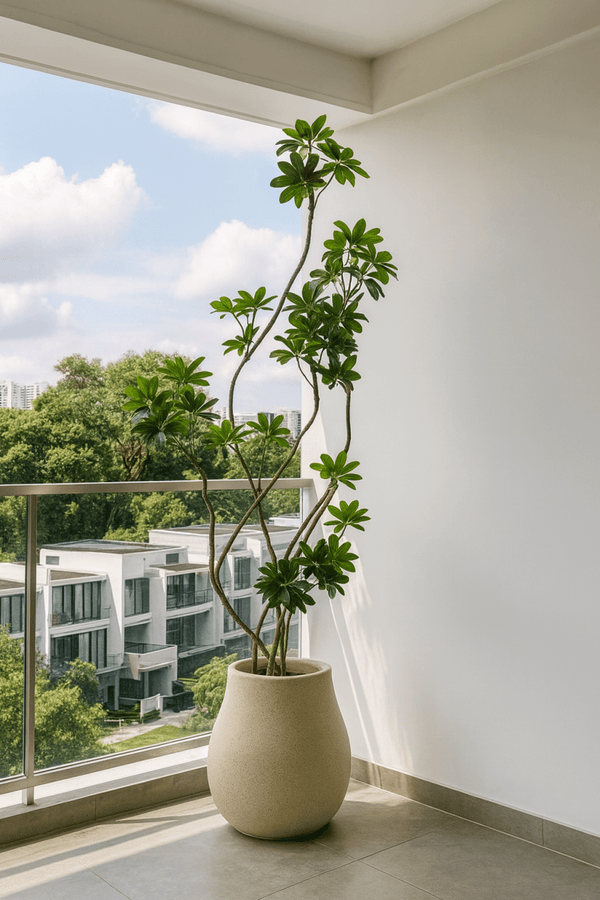
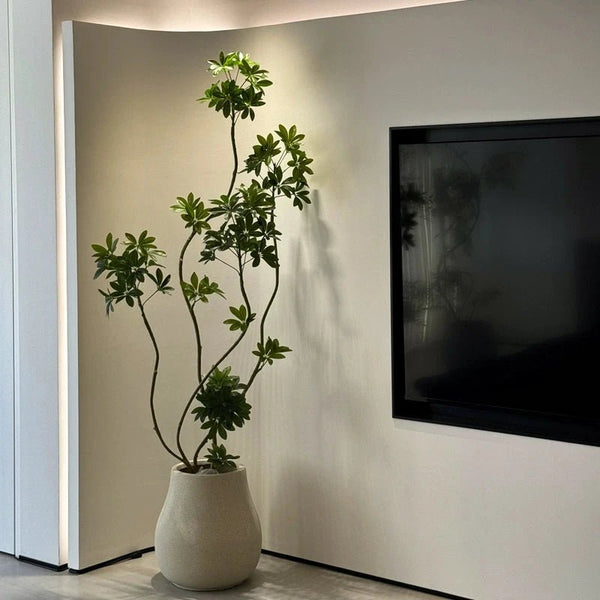
Because of its sculptural base and flowing leaves, Ponytail Palm works beautifully as a single feature plant on a sideboard, plant stand, low console or bright work-from-home corner. It pairs well with simple neutral planters because the plant already has a strong shape. For small Singapore apartments, it is a good choice when you want a plant that feels architectural without needing the floor space of a large tree.
FAQ: Ponytail Palm care in Singapore
Is Ponytail Palm beginner-friendly?
Yes. It is beginner-friendly if you can give it bright light and resist watering too often. The main mistake is treating it like a thirsty tropical plant.
Can Ponytail Palm grow indoors without direct sun?
It can grow in bright indirect light. A dim room is not ideal long-term, so place it close to your brightest available window or balcony door.
How often should I water a Ponytail Palm in Singapore?
Water when the top part of the soil has dried and the pot feels lighter. For many homes, this is about every 1–2 weeks, but light and pot size matter more than a fixed calendar.
Should I mist Ponytail Palm?
No. Misting is not needed. Clean leaves occasionally and focus on bright light, drainage and careful watering instead.
Shop the Ponytail Palm when available, or browse more indoor plants for Singapore homes if you are building a low-maintenance green corner.
Shop palms
View all 1
Hand-delivered by our delivery team. Pick your delivery date at checkout.